Submit a request
Submit a request
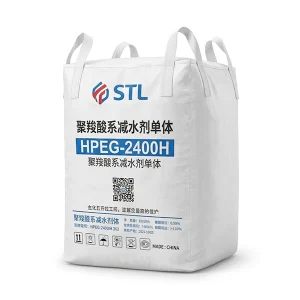
HPEG-2400 (Metallyl Polyethylene Glycol) is a high-molecular-weight, water-soluble, nonionic monomer (macromonomer) that is a methallyl ether of polyethylene glycol with a molecular weight of approximately 2400. It is produced by the oxyethylation of methallyl alcohol.
HPEG-2400 is the main raw material (building block) for the synthesis of polycarboxylate superplasticizers (PCs)—a new generation of concrete admixtures.
It is a white to yellowish solid, often in the form of plates, flakes, or flaked powder. It has good solubility in water.
| PARAMETERS | MEANING/CHARACTERISTICS |
| Appearance | White or yellowish solid (flakes/platelets/powder) |
| Molecular weight | 2160-2640 g/mol (nominal 2400) |
| Hydroxyl number | 20.5-26.5 mg KOH/g |
| Iodine number | ≥ 9.5 g I2/100 g |
| Humidity | ≤ 0,5%- ≤ 1,0 % |
| pH (1% aqueous solution) | 5.0-7.0 (neutral environment) |
| Solubility | Well soluble in water and many organic solvents |
The primary and most important application of HPEG-2400 is the production of polycarboxylate superplasticizers (PCE) for concrete.
In the production of concrete admixtures (Polycarboxylates)
HPEG-2400 acts as a macromonomer that, through radical copolymerization (e.g., with acrylic acid), forms a complete polycarboxylate ester molecule. Key advantages of using HPEG-2400:
— High reactivity: Due to its high double bond retention (≥90%) and low polyethylene glycol impurity content, HPEG-2400 ensures high conversion during synthesis and the production of an effective product.
— Comb structure: Enables the creation of polymers with an optimal architecture, where the main chain is responsible for adsorption on cement particles, and the side chains (from HPEG) provide steric repulsion and dispersion.
— Environmental friendliness: The production process for HPEG-based polycarboxylates is “green” because it does not use formaldehyde, and the finished product has low chloride and sulfate levels.
Final properties of concrete with HPEG-2400-based admixtures:
— High water reduction: Allows for a 25-40% reduction in water content in the concrete mix without sacrificing workability. This significantly increases the strength and durability of the concrete.
— Improved workability: Concrete becomes more fluid and easier to place, simplifying construction processes.
— Maintained slump: Ensures low slump loss over time (e.g., one hour after mixing), which is critical during transportation and pouring.
— High strength and durability: Reducing the water-cement ratio results in high-strength, dense, and frost-resistant concrete.
Other applications:
Besides the production of construction chemicals, HPEG-2400 (and similar polyesters) can be used:
In the production of detergents: as nonionic surfactants.
In cosmetics: for the production of thickeners and humectants.
In agriculture: for the controlled release of fertilizers.
In the oil and gas industry: as a component of hydraulic fracturing fluids.
In the production of chemicals for textiles and leather.
Sodium nitrate
Triisopropanolamine - TYPE - TYPA
DEFOAMER PC-310 - defoamer PC-310
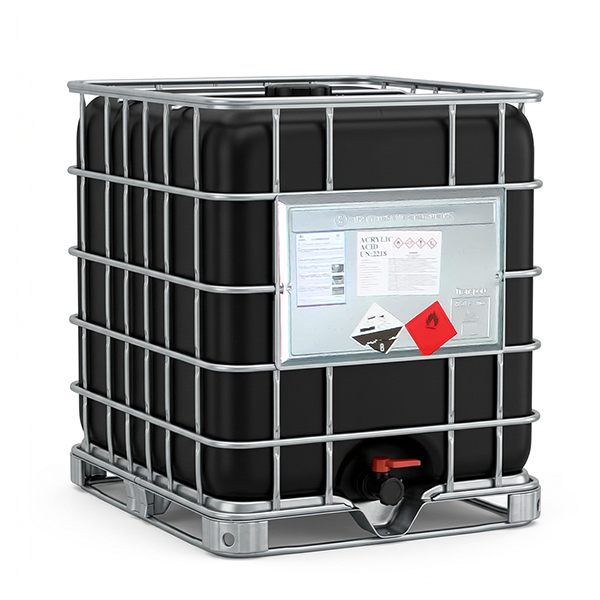
Acrylic acid