Submit a request
Submit a request
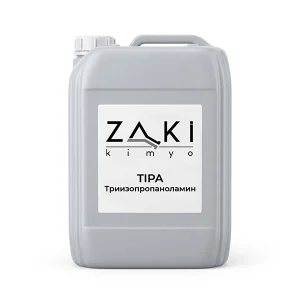
Triisopropanolamine (TIPA, Tri-2-propanolamine, Tris(2-hydroxypropyl)amine) is an organic compound of the alkanolamine class (a tertiary amine). It is a viscous liquid or solid (often a white crystalline solid at room temperature) with a slight ammoniacal odor.
It has buffering properties and is a multifunctional amine that acts as a strong base, improving solubility and reactivity in various environments. Unlike its analog TEA (triethanolamine), TIPA is particularly effective in increasing the late strength of cement systems.
Characteristics may vary slightly depending on the manufacturer and product purity (typically available in concentrations from 85% to 99%). Typical values for a high-purity product are listed below.
| PARAMETERS | MEANING/CHARACTERISTICS |
| Appearance | White or yellowish substance (crystals/paste) or liquid. |
| Content of the main substance | ≥98,0%-99,0% |
| Melting point | 45-52 °С |
| Boiling point | ~300-305 °С |
| Solubility in water | Good |
Triisopropanolamine (TIPA) is a versatile product, but its primary and most widespread use is in the production of cement and concrete additives.
In cement and concrete production:
Grinding intensifier (grinding aid): TIPA is added during the grinding of cement clinker in ball mills. It reduces particle agglomeration, increasing grinding efficiency and optimizing the cement particle size distribution.
Concrete strength improver: This is its unique function. TIPA accelerates the hydration of aluminoferrite phases of cement (C4AF), forming soluble complexes with iron ions. Through this mechanism, it significantly increases the strength of concrete at late stages of hardening (7 and 28 days), which distinguishes it from triethanolamine (TEA). It also improves the strength of cement-fly ash systems.
In other industries:
Paints and varnishes: Used as a neutralizing agent in water-based coatings to adjust pH, and as a dispersant for pigments (e.g., titanium dioxide). It can also be used as a crosslinking agent in special coatings. Metalworking: Serves as a raw material for the production of triazine-based corrosion inhibitors, as well as an antioxidant and component of cutting fluids.
Polyurethane production: Used as a catalyst or crosslinking agent.
Feedstock for synthesis: Used in the production of herbicides, emulsifiers, and other chemical products.

Sodium nitrate
Lignosulfonates
Sodium gluconate
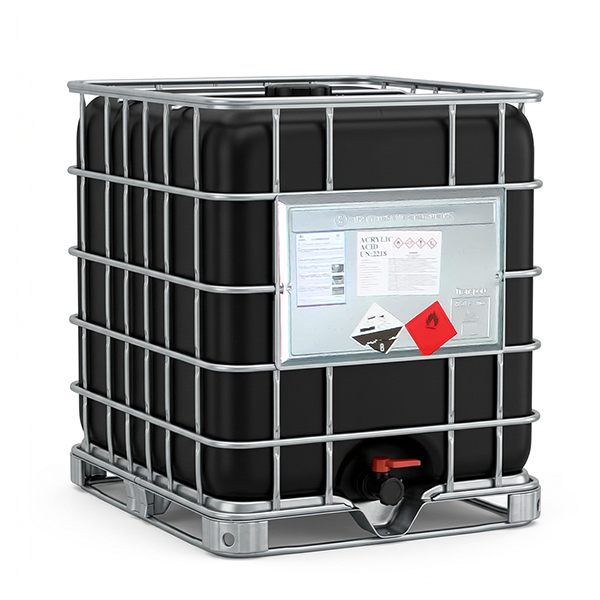
Acrylic acid