Submit a request
Submit a request
N,N-Diisopropylethylamine (abbreviated DIPEA) is an organic compound belonging to the class of tertiary amines. In chemical literature, it is most often referred to as Hünig’s base, named after the German chemist Siegfried Hünig, who introduced it into widespread use.
It is a classic example of a sterically hindered (or non-nucleophilic) base. Due to the bulky isopropyl groups surrounding the nitrogen atom, the molecule exhibits high basicity (easily absorbs protons) but extremely low nucleophilicity (it undergoes substitution reactions with difficulty). This makes it an ideal acid scavenger in reaction mixtures containing other electrophiles (e.g., haloalkanes) with which ordinary bases might otherwise react.
It is a colorless or slightly yellowish liquid with a characteristic amine (ammonia-like, “fishy”) odor.
| PARAMETERS | MEANING/CHARACTERISTICS |
| Name (IUPAC) | N-Ethyl-N-(propan-2-yl)propan-2-amine |
| Molecular formula | C8H19N |
| Appearance | Transparent liquid from colorless to light yellow |
| Purity | ≥99.0% (standard reagent)
≥99.5% (high purity) |
| Key impurities | Water (H2O): ˂ 0.05% – 0.3% depending on the brand; Diisopropylamine: ˂ 0.30% |
| Boiling point | 127°С |
| Melting point | ˂ — 50 °С |
| Flash point | ~ 10-12 °C (flammable liquid) |
| Density | ~ 0,742 г/см3 |
| Solubility in water | Partial (~3.9-7.4 g/l at 20°) |
| pH (aqueous solution) | ~ 12.3 (20 °C) – strongly basic environment |
Due to its unique nature (strong base + low nucleophilicity), DIPEA finds wide application in organic synthesis, especially in fine organic chemistry and pharmaceuticals.
Alkylation and prevention of side reactions: A classic application is in the alkylation of secondary amines with haloalkanes. The hydrogen halide (acid) released during the reaction is scavenged by Hünig’s base, precipitating as a salt. Without DIPEA, this acid would react with the starting amine, reducing the yield of the target product. Due to its steric properties, DIPEA itself does not react with the alkyl halide and does not produce quaternary ammonium salts as byproducts.
Peptide synthesis: One of its main applications. It is used as a “proton trap” (acid acceptor) in peptide bond formation reactions. Its use helps prevent racemization (loss of optical purity) of amino acids, which is critical for the production of biologically active peptides.
Metal complex catalysis: Serves as a base in various metal-catalyzed cross-coupling reactions:
— In palladium(0)-catalyzed alkoxycarbonylation of allyl phosphates and acetates.
— In C–N coupling of aryl halides with nitroarenes in the presence of a nickel catalyst.
Enolization reactions: Used for the selective formation of enolates, for example, in combination with boryl triflates.
Heterocycle synthesis: Used as a synthetic “building block,” for example, in the reaction with dichlorodisulfide (Cl−S−S−Cl) to produce highly sulfurized heterocycles.
Research areas: In addition to pharmaceuticals, it is used in polymer chemistry (production of special polymers) and in the development of “green” reagents in environmental chemistry.
Sodium nitrate
Sodium gluconate
Lignosulfonates
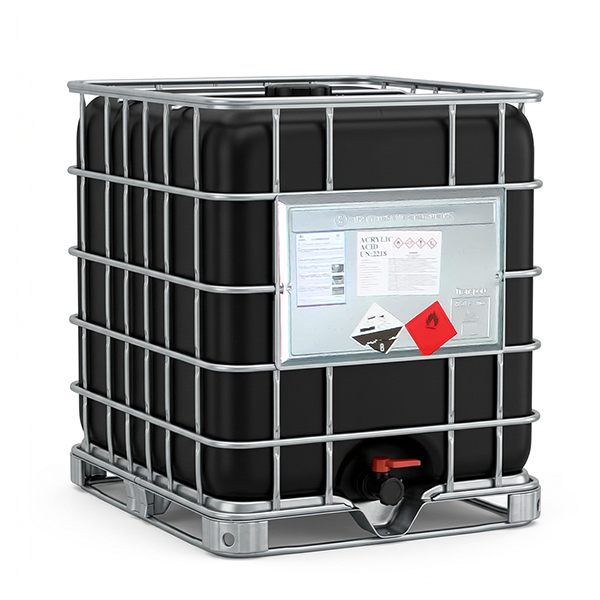
Acrylic acid